
Assisted Living Consulting: Why Your Facility Needs an Operational Manual
Why Every Assisted Living Facility Needs an Operational Manual
A clear, practical operational manual is one of the most important management tools an assisted living facility can have. For owners, administrators, executive directors, and management teams, it connects your vision, your assisted living policies and procedures, and your day‑to‑day assisted living operations into a single, usable framework. Whether you are already licensed or preparing to open, a well‑developed assisted living operational manual supports consistency, staff training, documentation, assisted living compliance, and assisted living survey readiness. Assisted Living Network Group (ALNG) frequently sees that facilities with strong manuals and organized systems are better prepared for change, better positioned for growth, and better able to protect residents and staff. Assisted living consulting can play a key role in building and maintaining that framework.
Why an Operational Manual Matters in Assisted Living Facility Management
An operational manual is the central reference for how your assisted living facility operates on a daily basis. It connects your mission, organizational structure, assisted living policies and procedures, and workflows into a practical, step‑by‑step guide for staff. When thoughtfully developed, it becomes:
A roadmap for consistent resident care and service delivery
A training and reference tool for new and existing team members
A way to translate regulations into clear daily practice
Without a clear manual, facilities often rely heavily on individual staff knowledge, informal habits, or “the way we’ve always done it.” This creates risk when key people leave, when surveyors arrive, or when circumstances change quickly, such as during a public health event or regulatory update. A strong operational manual supports continuity, reduces confusion, and helps leaders manage assisted living facility operations more confidently.
State‑Based Requirements and the Need for Customization
In the United States, there is no single federal standard for assisted living operational manuals. Regulations are set at the state level, and expectations may be described as an “operating plan,” “policies and procedures,” or “operations manual,” depending on the jurisdiction. Requirements also vary by license type, facility size, scope of services, and whether you provide additional health or dementia‑specific services.
For example, some states require detailed written medication management plans, job descriptions, or emergency preparedness procedures as part of the facility’s operational documentation. Others emphasize admissions, service planning, staffing, or physical environment standards. Because of this variability, every assisted living operational manual should be customized and aligned with:
Your state’s current assisted living regulations and guidance
Your specific license category and permitted services
Your building design, staffing model, and resident population
Because regulations change, it is essential to verify requirements with your licensing agency, review state guidance regularly, and consult qualified professionals. Assisted living consulting services, such as those offered by Assisted Living Network Group, can help you interpret requirements, identify gaps, and adapt your operational manual to your specific setting. However, consulting support does not replace legal advice or guarantee licensing or compliance outcomes.
Key Reasons Every Assisted Living Facility Needs an Operational Manual
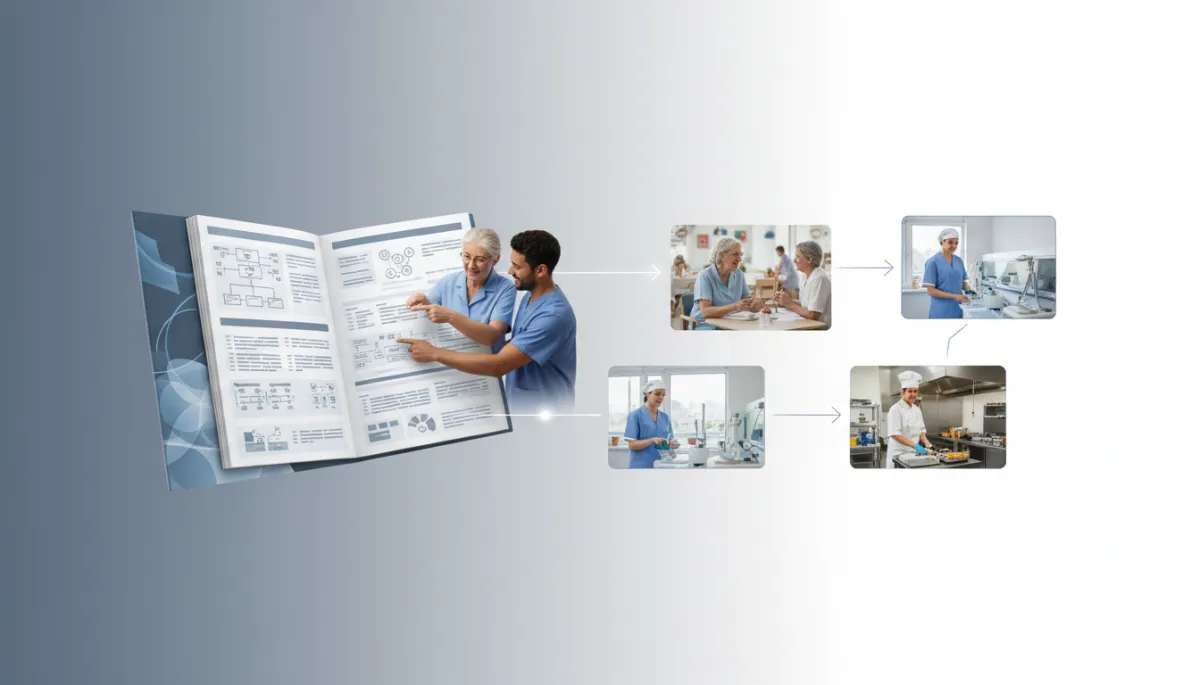
1. Creating Consistency Across Assisted Living Operations
Inconsistent practices—such as different medication pass routines on each shift or varying approaches to incident reporting—can confuse staff, frustrate families, and create compliance risk. An operational manual establishes standard workflows so that:
Residents receive services in a predictable, reliable way
Staff know what is expected of them in routine and non‑routine situations
When everyone follows the same processes, assisted living best practices are easier to maintain and improve over time.
2. Defining Roles and Responsibilities
Unclear roles often lead to tasks being duplicated, delayed, or missed altogether. For example, if it is not defined who updates service plans, who follows up on physician orders, or who monitors staff training records, these responsibilities can easily fall through the cracks. Your operational manual should clearly describe:
Leadership and reporting structure for assisted living facility management
Key duties for each role and position, including on‑call expectations
Clear role definitions support accountability, teamwork, and smoother operations, especially during staffing changes or growth.
3. Supporting Assisted Living Staff Training and Onboarding
Turnover is a reality in assisted living. Without a structured operational manual, new staff often depend on informal shadowing or verbal instruction, which can vary widely. A well‑organized manual supports assisted living staff training by providing:
Step‑by‑step descriptions of daily routines, such as shift handoff and meal service
Clear expectations for documentation, communication, and escalation of concerns
When used alongside your assisted living policies and procedures, the manual helps standardize training and gives supervisors a consistent reference point for coaching and performance evaluation.
4. Reducing Dependence on Key Individuals
Many facilities rely heavily on a few long‑term employees who “know everything.” While their experience is invaluable, it is risky to keep critical operational knowledge only in people’s heads. If those individuals leave, become ill, or take extended leave, operations can become unstable. A comprehensive assisted living operational manual:
Captures essential processes in writing so they can be taught and replicated
Supports continuity when leadership or staff transitions occur
Assisted living consulting projects often begin by documenting these “unwritten systems” to protect the organization from unexpected disruption.
5. Establishing Workflows and Improving Efficiency
Inefficient or unclear workflows lead to repeated phone calls, delayed responses, and staff frustration. Examples include not knowing how to handle after‑hours admissions, unclear processes for maintenance requests, or confusion about who schedules follow‑up appointments. Your operational manual should map out core workflows such as:
Resident move‑in and move‑out processes, including communication with families
Service plan development, review, and updates
Medication ordering, delivery, administration, and reconciliation
Clear workflows reduce errors, support timeliness, and free leaders to focus on higher‑level assisted living facility management tasks.
6. Supporting Assisted Living Compliance and Survey Readiness
Surveyors and licensing agencies often look for both written systems and evidence that those systems are followed in practice. A well‑structured operational manual can help your team:
Organize documentation in ways that align with state requirements and survey tools
Prepare staff to answer questions about daily operations with confidence and accuracy
While an operational manual alone does not guarantee assisted living compliance, it supports consistent implementation of your assisted living policies and procedures and strengthens assisted living survey readiness efforts.
7. Improving Documentation and Communication
Documentation and communication problems can contribute to compliance concerns, operational errors, and complaints. Common issues include incomplete notes, missing follow‑up actions, and miscommunication between shifts or departments. Your operational manual should describe:
How, when, and where staff document care, incidents, and changes in condition
Expectations for shift report, family communication, and provider coordination
Clear documentation standards support safer care, better team communication, and stronger assisted living documentation for regulatory and legal purposes.
8. Enhancing Resident Safety and Quality of Life
At the center of every system is resident safety and well‑being. Clear operational guidance on fall prevention, emergency response, infection control, and behavioral concerns helps staff respond quickly and appropriately. When expectations are vague, responses may be delayed or inconsistent. A strong operational manual helps staff:
Recognize and escalate changes in condition promptly
Follow consistent steps during emergencies and drills
These practices align with assisted living best practices and support a safer, more predictable environment for residents and families.
9. Identifying Operational Gaps and Facilitating Updates
The process of building or revising an operational manual often reveals gaps, overlaps, or inefficiencies in assisted living facility operations. For example, you may discover that incident follow‑up is not clearly assigned, or that there is no defined process for reviewing vendor performance. By documenting your systems, you can:
Identify where additional procedures, training, or tools are needed
Create a structure for periodic review and continuous improvement
Assigning ownership for manual updates ensures that changes in regulation, practice, or technology are reflected in your systems over time.
10. Ensuring Continuity During Staffing and Leadership Changes
Leadership transitions, acquisitions, expansions, and turnover are common in the assisted living sector. Without a current operational manual, new leaders may spend months piecing together how the facility actually operates. A well‑maintained manual supports smoother transitions by:
Providing a clear starting point for new administrators and directors
Preserving institutional knowledge and expectations during change
This continuity benefits residents, staff, and owners by minimizing disruption and maintaining operational stability.
What Should an Assisted Living Operational Manual Include?
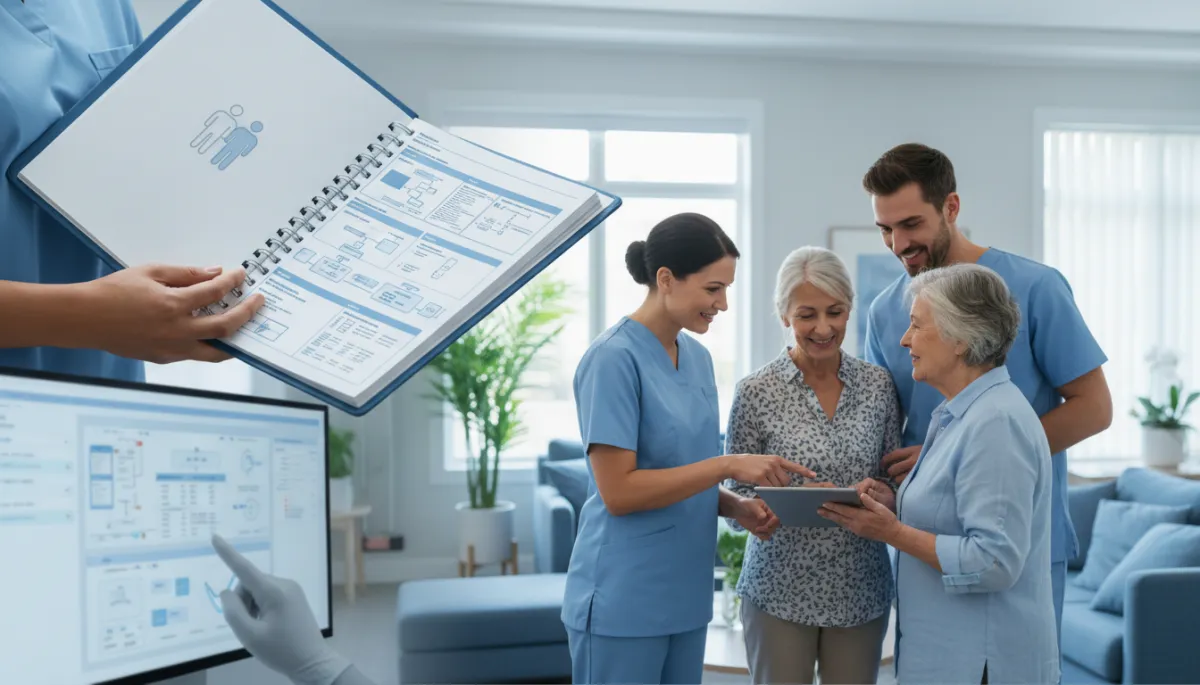
Because requirements vary by state, license type, and facility model, the following categories are general frameworks, not strict checklists. Each facility should confirm state and local expectations and adapt content accordingly.
Organizational Structure: Ownership, leadership roles, reporting lines, and on‑call structure for assisted living facility management.
Daily Operations and Routines: Shift routines, housekeeping schedules, laundry processes, meal service, transportation, and activity coordination.
Resident Processes: Inquiry, admission, assessment, service plan development, move‑in, transfers, discharges, and end‑of‑life coordination, consistent with assisted living policies and procedures and state rules.
Staffing and Human Resources: Recruitment, orientation, training, competency validation, scheduling, job descriptions, and performance expectations, aligned with assisted living compliance requirements for background checks and training.
Medication Management: Coordination with pharmacies, storage, administration, documentation, error reporting, and oversight, in line with state‑specific rules and your scope of care.
Emergency Procedures: Fire safety, disaster response, evacuation, missing resident protocols, and communication with families and authorities, aligned with fire marshal and state expectations.
Infection Prevention and Control: Standard precautions, outbreak response, cleaning and disinfection routines, and coordination with public health guidance, reflecting current best practices for assisted living operations.
Safety and Maintenance: Environmental rounds, maintenance requests, hazard reporting, equipment checks, and vendor coordination for systems such as fire alarms and elevators.
Documentation and Records: Resident records, service plans, incident reports, logs, staff files, and record retention practices that support assisted living documentation expectations in your state.
Complaints and Grievances: How residents, families, and staff can raise concerns; response timelines; documentation; and communication of outcomes.
Quality Assurance and Performance Improvement: Internal audits, incident review, tracking of trends, and follow‑up actions to strengthen assisted living best practices over time.
Communication Systems: Staff meetings, shift huddles, communication boards, electronic systems, and methods for sharing updates and changes in policy or procedure.
These categories should reflect how your facility actually operates. Assisted living consulting support can help you translate these broad areas into specific, practical guidance for your team.
Operational Manual vs. Policies and Procedures: What’s the Difference?
The terms “operational manual” and “policies and procedures” are often used together, but they are not the same thing. Understanding the distinction helps you design documents that work together effectively.
Policies describe your rules and expectations. They answer “what” and “why.” For example, a medication policy might state that medications must be stored securely and administered according to orders and state law.
Procedures outline specific steps to carry out a policy. They answer “how” and “by whom.” A medication administration procedure might describe each step from receiving medications to documenting administration and handling refusals.
The operational manual integrates these policies and procedures into a practical framework for your facility. It organizes them by function (for example, “Admissions” or “Emergency Response”), connects them to roles and workflows, and shows how they fit into daily assisted living facility operations.
In simple terms: policies establish the rules; the operational manual shows how the rules work in real life. Both are essential. Assisted living consulting can help ensure that your policies, procedures, and manual are aligned, realistic, and consistent with your state’s assisted living compliance requirements.
Common Mistakes in Assisted Living Operational Manuals – and How to Avoid Them
Copying Generic Manuals: Using a generic template that does not reflect your state rules, license type, or actual practices can create confusion and risk. Instead, treat templates as starting points and customize them thoroughly to your operations and regulatory environment.
Writing Procedures That Do Not Match Reality: If the manual describes an ideal process that staff do not or cannot follow, it may create compliance issues during surveys. Involve frontline staff and supervisors in drafting and reviewing procedures to ensure they are accurate and workable.
Neglecting Staff Training: A manual that is never reviewed with staff is unlikely to shape practice. Integrate key sections into orientation, annual training, and competency checks. Encourage staff to reference the manual and ask questions when they are unsure.
Allowing Manuals to Become Outdated: Regulations, technology, and facility practices change. Establish a regular schedule for reviewing your manual and update it whenever applicable regulations, facility practices, services, technology, or organizational responsibilities change. Follow any specific review or update frequency required by your jurisdiction.
Overcomplicating Content: Extremely long, technical, or legalistic manuals may be difficult for staff to use. Aim for clear, concise language, practical steps, and logical organization. Complex topics can be supported with checklists, flowcharts, or quick‑reference tools.
Failing to Assign Responsibility for Updates: Without a designated owner, manuals often sit unchanged. Assign a leader or committee to oversee updates, gather feedback, and coordinate with assisted living consulting or legal resources as needed.
Treating the Manual as “Only for Regulators”: When manuals are viewed solely as regulatory documents, they are less likely to be used day‑to‑day. Present the manual as a tool that helps staff succeed, improves resident care, and supports a calmer, more organized workplace.
How to Build an Assisted Living Operational Manual: Step‑by‑Step Guide
Step 1: Understand Your Regulatory Requirements
Start by reviewing your state’s assisted living regulations, guidance documents, and any available checklists or model policies. Identify required elements such as emergency plans, medication procedures, staffing standards, or service plan requirements. Note any expectations for written operating plans or manuals specific to your license type.
Step 2: Map Your Current Operations
Document how your facility currently operates, from inquiry to move‑out. Talk with staff on all shifts and in all departments. Identify informal practices that are working well and areas where processes are unclear or inconsistent. This mapping step helps ensure your manual reflects reality and highlights where improvements are needed.
Step 3: Identify Key Operational Areas and Priorities
Group your operations into major sections, such as admissions, resident care, medication management, staffing, emergency preparedness, and quality assurance. Prioritize high‑risk or high‑impact areas first—such as medication systems and emergency procedures—then build out supporting sections. Assisted living consulting partners can help you structure these sections in a way that aligns with assisted living facility operations and survey focus areas.
Step 4: Assign Responsibilities and Owners
Decide who is responsible for drafting, reviewing, and approving each section. Include leadership, department heads, and experienced frontline staff where appropriate. Clarify who will own ongoing updates for each area to support continuity and accountability.
Step 5: Document Procedures in Clear, Simple Language
Write procedures that are specific, step‑by‑step, and easy to follow. Use bullet points, numbered steps, and headings. Avoid jargon where possible. For each procedure, consider including:
Purpose and scope (what the procedure covers and why it exists)
Responsible roles (who does what)
Detailed steps, including documentation and communication requirements
Step 6: Review for Alignment and Compliance
Compare your draft manual to your assisted living policies and procedures and to state regulations. Confirm that your processes support regulatory expectations and that there are no contradictions between documents. Consider involving legal counsel or compliance specialists where appropriate. Assisted living consulting teams can provide an external review to highlight inconsistencies or gaps.
Step 7: Train Staff and Integrate the Manual into Daily Practice
Introduce the manual to staff through orientation sessions, in‑service training, and regular huddles. Show team members where to find the manual (printed, digital, or both) and how to use it. Encourage supervisors to reference specific sections during coaching and performance discussions. Incorporate key procedures into competency evaluations and drills to reinforce learning.
Step 8: Test, Monitor, and Improve
Use drills, mock surveys, and quality audits to test whether procedures are being followed and whether they work as intended. Gather feedback from staff about what is helpful and what may need adjustment. Use incident reviews, complaint trends, and survey findings to refine and strengthen your manual over time.
Step 9: Schedule Regular Updates
Establish a regular schedule for reviewing the operational manual and update it whenever applicable regulations, facility practices, services, technology, or organizational responsibilities change. Follow any specific review or update frequency required by your jurisdiction.
Assisted Living Operational Manual Checklist: Key Questions for Your Facility
Use this concise checklist to assess whether your essential operational systems are documented and organized. It is not a substitute for state regulations, but a practical starting point:
Do we have a clearly defined organizational chart and leadership structure, including on‑call responsibilities?
Are our admission, assessment, and service plan processes described step‑by‑step and aligned with state requirements?
Are daily routines and shift expectations documented for all departments (care, dining, housekeeping, activities, maintenance)?
Do we have written procedures for medication ordering, storage, administration, documentation, and error reporting that reflect our actual practice?
Are staff recruitment, orientation, training, and competency processes documented and consistent with assisted living compliance expectations in our state?
Are emergency response, evacuation, and disaster procedures clearly described and regularly drilled with staff?
Do we have written infection control and environmental safety procedures that reflect current best practices and state guidance?
Is there a defined process for handling complaints, grievances, and incident follow‑up, including documentation and communication steps?
Do we conduct regular internal reviews or quality assurance activities, and are these processes described in our manual?
Have we assigned responsibility for maintaining and updating the operational manual, and do we track revisions over time?
How Assisted Living Consulting Supports Operational Manuals and Systems
Many owners, operators, and administrators recognize the value of an operational manual but feel stretched for time or unsure where to begin. Assisted living consulting can provide structured support while still keeping you in control of your operations and compliance responsibilities. Services may include:
Gap Assessments: Reviewing your existing documentation, policies, and operational practices to identify areas where procedures are missing, unclear, or inconsistent with regulations.
System Organization: Helping you structure your operational manual so that staff can easily find relevant guidance and aligning it with survey focus areas and assisted living facility operations.
Customization of Processes: Translating state regulations and assisted living policies and procedures into practical workflows tailored to your building, staffing model, and resident population.
Documentation Improvement: Strengthening forms, checklists, logs, and templates to support consistent implementation and stronger assisted living documentation for surveys and internal review.
Team Preparation: Supporting leaders in rolling out new or revised manuals, facilitating staff training, and integrating procedures into daily practice and assisted living staff training programs.
It is important to note that assisted living consulting is a supportive resource, not a guarantee of licensing, survey outcomes, or legal compliance. Facilities remain responsible for verifying requirements with state authorities and qualified professionals and for ensuring that their operations match their written systems.
Partner With Assisted Living Network Group
Assisted Living Network Group (ALNG) supports assisted living professionals across the United States with the operational and strategic tools needed to build sustainable, resident‑focused communities. Whether you are planning a startup, navigating licensing, or strengthening an existing operation, ALNG can provide assisted living consulting tailored to your goals and regulatory environment.
Startup Planning and Licensing: Guidance on organizing your operating plan, aligning your assisted living operational manual with state expectations, and preparing supporting documentation for applications and inspections.
Operational Systems and Workflow Design: Support in mapping your assisted living facility operations, clarifying roles, and building practical procedures that staff can follow consistently across shifts and departments.
Policies, Procedures, and Manuals: Assistance in organizing and aligning your assisted living policies and procedures with a cohesive operational manual that reflects your license type, resident needs, and state regulations.
Compliance and Survey Readiness: Practical support in evaluating systems, preparing teams for inspections, and strengthening documentation to support assisted living compliance and assisted living survey readiness efforts.
Staff Preparation and Training Support: Strategies for integrating your operational manual into orientation, ongoing education, and competency programs to build confident, informed teams.
If you are ready to organize your systems, strengthen your documentation, or develop a comprehensive assisted living operational manual, consider partnering with Assisted Living Network Group. ALNG’s assisted living consulting services are designed to be practical, supportive, and aligned with your unique facility and regulatory environment.
To explore how Assisted Living Network Group can support your assisted living facility management, operational systems, and survey readiness through customized assisted living consulting, we invite you to connect with our team and discuss your goals, challenges, and next steps.
Educational Disclaimer
This article is provided for general educational and informational purposes only and does not constitute legal, regulatory, or compliance advice. Assisted living requirements, including requirements related to operational manuals, policies, and procedures, vary by state, license type, facility model, and scope of services and may change over time.
Facilities should verify current requirements with the appropriate state and local regulatory authorities and consult qualified legal, regulatory, or compliance professionals regarding their specific circumstances. Assisted Living Network Group (ALNG) and its assisted living consulting services do not guarantee licensing approval, survey outcomes, or regulatory compliance.
