Is Your Assisted Living Facility Running Efficiently? How Technology and Automation Can Help.
Assisted Living, Operations, Technology, Automation
Is Your Assisted Living Facility Running Efficiently? How Technology and Automation Can Help.
Assisted living owners and administrators balance a complex mix of responsibilities every day—resident care, staffing, medication management, documentation, communication, scheduling, compliance, and financial administration. Technology and automation are no longer “nice-to-have” extras; they are practical tools that can help assisted living communities operate more efficiently, support caregivers, and enhance resident safety and quality of life. This article explores how assisted living technology and automation can strengthen daily operations and how Assisted Living Network Group (ALNG) can be a partner in that journey.
1. Why Technology Matters in Assisted Living Operations
Running an assisted living facility involves far more than providing housing. Operators must coordinate personal care, medication assistance, meals, transportation, housekeeping, activities, and communication with families and healthcare providers. At the same time, they must manage staffing, training, policies, billing, documentation, and regulatory expectations that vary from state to state. Manual processes, paper records, and disconnected systems can make these responsibilities harder than they need to be—especially as resident needs become more complex and expectations for transparency increase.
Modern assisted living technology and automation tools are designed to help. From assisted living electronic health records and medication management systems to staff scheduling software, resident monitoring technology, and AI-supported analytics, these solutions can streamline workflows, improve organization, and support better decision-making. Industry research shows that senior living providers are investing more in integrated technology, managed Wi‑Fi, and AI-enabled tools to enhance operations and resident experience.
2. What Do Technology and Automation Mean in Assisted Living?
In assisted living, “technology” and “automation” cover a wide range of tools. Understanding the differences can help you choose the right mix for your community and avoid overbuying systems you do not need.
Digital systems that help staff perform tasks. These include assisted living management software, electronic health records, eMAR systems, and digital communication platforms. They organize information and make tasks easier, but still require staff input and oversight.
Automated systems that complete repetitive processes. Examples include automated billing runs, recurring invoice generation, routine report scheduling, or automatic medication reminders. Once configured, they execute tasks with minimal manual effort, while staff monitor the results.
Smart technologies that monitor or communicate information. This category includes resident monitoring technology such as motion sensors, emergency call systems, door alerts, environmental sensors, and wearable devices that send real-time notifications to staff smartphones or dashboards.
Artificial intelligence (AI) tools. AI in assisted living can help organize information, summarize documentation, identify patterns in incident reports or staffing data, and highlight trends that may require management attention. Some EHR and facility management platforms now embed AI features to support risk identification, documentation prompts, or predictive analytics—not to replace professional judgment, but to inform it.
For example, an assisted living facility might use an integrated platform that combines digital documentation in assisted living, assisted living medication management systems, assisted living staff scheduling software, and billing tools. On top of that, AI features may flag residents with increasing fall risk based on incident patterns or highlight staffing gaps during peak hours. Each component plays a different role in improving assisted living operations and assisted living facility management.
3. Eight Ways Technology and Automation Can Improve Assisted Living Operations
A. Electronic Health Records and Digital Documentation
Assisted living electronic health records and digital documentation systems centralize resident information in one secure place. Instead of relying on paper charts or scattered binders, staff can access care plans, assessments, service notes, physician orders, and incident reports from authorized devices. Platforms such as ECP, ALIS, and Yardi Senior Living Suite are examples of systems designed specifically for senior living operations.
Staff can quickly review resident histories, preferences, and risk factors before delivering care, supporting more consistent service across shifts.
Caregivers can document services in real time using tablets or workstations, reducing handwritten notes that may be hard to read or misfiled.
Incident reports, changes in condition, and follow-up actions can be recorded in a structured format and shared with authorized team members and, when appropriate, healthcare providers.
For administrators, digital documentation in assisted living makes it easier to run reports, track service utilization, and review trends in falls, hospital transfers, or care plan changes. This level of visibility supports stronger operational oversight and more informed decision-making.
B. Medication Management Systems
Medication assistance is a core service in many assisted living communities, and errors can have serious consequences. Assisted living medication management systems—often called eMARs (electronic medication administration records)—help staff track orders, schedules, and documentation more consistently. Some platforms integrate directly with pharmacies, reducing transcription errors and keeping medication lists up to date.
Electronic MARs display each resident’s medications, doses, routes, and times in a clear schedule, helping staff verify what is due and when.
Medication reminders and alerts can notify staff about upcoming doses, late administrations, or potential duplicate entries, supporting timely and accurate administration.
Automated dispensing technologies may support pre-packaged doses, controlled access, or logging when medications are removed, adding another layer of oversight.
Technology supports medication management but does not replace proper authorization, staff training, professional judgment, or required procedures. Staff must still follow state regulations, physician orders, and facility policies, and any alerts or system prompts should be reviewed by qualified personnel before action is taken.
C. Staff Scheduling and Workforce Management
Staffing is one of the largest operational challenges in assisted living. Assisted living staff scheduling software can help administrators create fair, compliant schedules while reducing last-minute scrambling. Tools such as ShiftCare, Connecteam, and workforce modules within broader senior living platforms automate much of the scheduling process.
Administrators can build schedules based on required staffing levels, staff roles, and resident acuity, rather than relying solely on manual spreadsheets.
Staff can view schedules, request time off, and swap shifts through mobile apps (subject to approval), reducing phone calls and miscommunication.
Attendance tracking, overtime monitoring, and credential reminders can be incorporated into the same system, helping leaders manage labor costs and compliance with staffing policies.
For multi-site operators, centralized workforce management tools can provide a portfolio-wide view of staffing patterns, turnover, and coverage, supporting more strategic workforce planning.
D. Resident Monitoring and Safety Technology
Assisted living resident monitoring technology has evolved significantly. Communities now have access to emergency call systems, wearable pendants, motion sensors, bed sensors, non-camera ambient monitoring, and environmental sensors that detect smoke, water leaks, or extreme temperatures. Some platforms use AI to analyze patterns and predict increased risk of falls or health changes.
Emergency call and wander management systems allow residents to request help quickly and can alert staff if someone exits a secure area unexpectedly.
Fall-detection and prediction tools—including wearable devices and contactless sensors—can notify staff when a fall is likely or has occurred, supporting faster response times.
Environmental monitoring can track room temperatures, humidity, or air quality and alert maintenance when conditions fall outside desired ranges.
These technologies must be implemented thoughtfully. Residents’ privacy, dignity, consent, and individual preferences should guide decisions about monitoring. Families and residents should understand what data is collected, how it is used, and who can access it. Technology can support resident safety, but it does not replace the presence of attentive, trained staff.
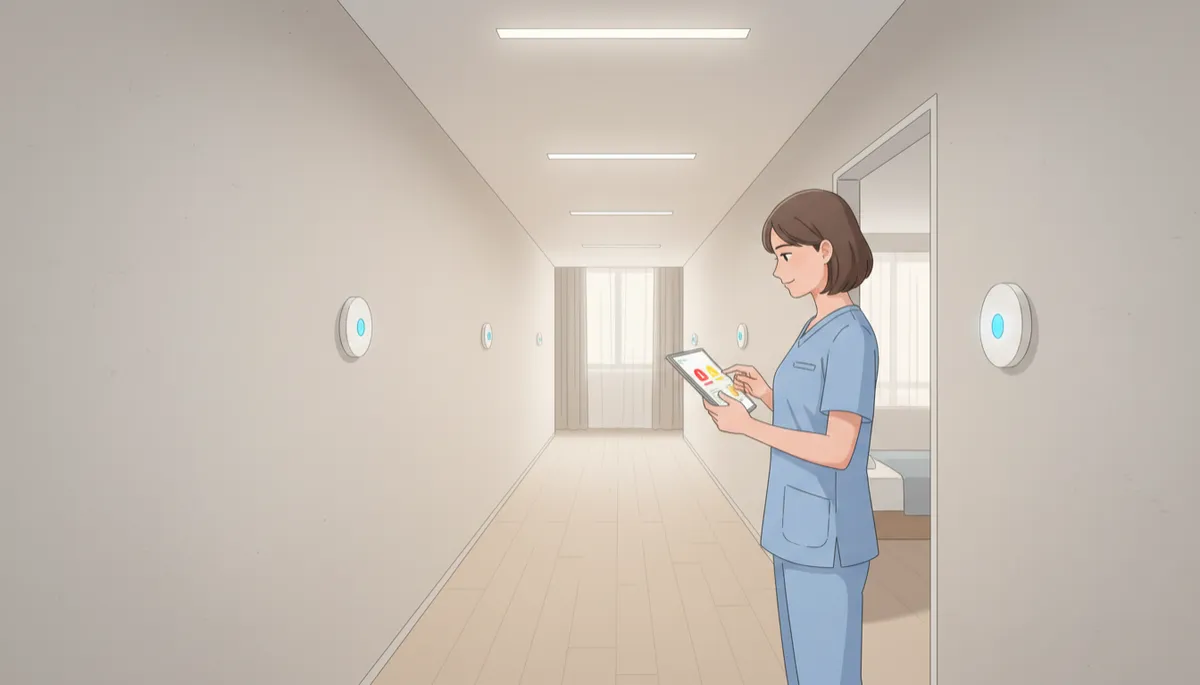
Well-chosen monitoring tools support timely responses while preserving resident dignity.
E. Communication With Families and Healthcare Providers
Families expect regular, transparent communication about their loved ones. Secure messaging platforms and digital family portals allow authorized individuals to receive appropriate updates, view activity calendars, and communicate with staff without relying solely on phone calls or paper notices. Some assisted living management software platforms include built-in portals that can share care plan updates, appointment reminders, or community announcements with designated contacts.
Staff can send secure messages to family contacts regarding non-emergency updates, schedule changes, or follow-up questions, with a documented communication trail.
Families can log in at their convenience to see calendars, menus, or community news, reducing repetitive inquiries at the front desk.
Secure messaging and document-sharing with healthcare providers can support more coordinated care, especially when residents see multiple clinicians.
These tools should be configured to respect privacy rules and facility policies, with clear guidelines on what information can be shared electronically and with whom.
F. Billing, Financial Management, and Administrative Automation
Assisted living facility management involves significant financial administration—monthly rent, level-of-care fees, ancillary charges, payroll, vendor payments, and more. Digital billing and financial management systems can automate recurring invoices, track payments, and integrate with accounting software. Many assisted living technology platforms now combine care documentation, billing, and reporting into a single system, reducing duplicate data entry.
Digital invoicing and payment tracking can reduce manual reconciliation and make it easier to identify outstanding balances or billing trends.
Payroll systems can integrate with time and attendance data from workforce management tools, reducing errors and administrative time.
Automated recurring charges—for example, monthly rent or standard service packages—can be scheduled, with staff focusing on reviewing exceptions rather than building each invoice from scratch.
While automation can reduce repetitive administrative work and improve organization, leaders should still review financial reports regularly and maintain strong internal controls.
G. Compliance, Reporting, and Survey Readiness
Assisted living regulations vary by state, but most require documentation of policies, staff training, incident reporting, maintenance, and resident records. Digital systems can help organize:
Policies and procedures with version control and acknowledgment tracking.
Staff credentials, licenses, and training records with automated reminders for upcoming renewals or required courses.
Incident reports, investigations, and corrective actions in a standardized format that can be reviewed by leadership and, when appropriate, regulators.
Maintenance logs, life-safety inspections, and service records for equipment and building systems.
With organized digital records, routine monitoring and survey preparation can be more manageable. However, software alone does not guarantee compliance. Facilities must still follow applicable state requirements, maintain accurate records, and ensure that staff understand and implement policies correctly.
H. Artificial Intelligence and Predictive Analytics
AI in assisted living is an emerging area with practical, realistic applications. Operators are using AI-enabled tools to support documentation, identify patterns in incident reports, and predict operational risks such as falls or hospital transfers. When thoughtfully selected and configured, AI-supported analytics can give administrators a clearer picture of what is happening across their assisted living operations.
AI can help summarize progress notes, generate draft care summaries, or organize large volumes of narrative documentation for administrative review, making it easier to spot missing information or inconsistent entries that need follow-up.
Predictive analytics can highlight residents with increasing fall risk based on changes in gait, activity patterns, or prior incidents, allowing earlier interventions such as care plan reviews, environmental adjustments, or closer observation. These tools cannot guarantee that falls or incidents will be prevented, but they can help teams focus attention where it may be most needed.
AI tools can flag unusual billing patterns, staffing trends, or maintenance issues that may require leadership attention—for example, repeated last-minute shift changes on a particular unit, recurring overtime for specific roles, or a pattern of similar incident types during certain times of day.
AI in assisted living can also support operational reporting by organizing and summarizing incident reports for management review, grouping similar events, and presenting trends in a format that is easier to review during quality improvement or risk management meetings.
Over time, AI-enabled dashboards can help administrators see how key indicators—such as occupancy, response times, staffing coverage, or hospital transfer patterns—are changing, supporting more informed decisions about staffing, training, workflow design, and assisted living automation priorities.
In practice, this means AI can help leaders identify recurring operational challenges earlier, focus on areas with the greatest risk, and prepare for discussions with owners, boards, or surveyors using clearer data. AI-generated information must always be reviewed by qualified staff, and these tools should not independently make critical resident-care decisions, diagnose medical conditions, or replace professional judgment. Instead, they serve as an additional source of insight to support human decision-making in assisted living operations and to complement the work of caregivers, administrators, and healthcare professionals.
Common Technologies Used in Assisted Living and What They Do
Assisted living facilities do not need to adopt every available technology in order to benefit from technology in assisted living. The right combination of assisted living technology depends on each community’s size, operational challenges, budget, resident needs, and regulatory requirements. The table below summarizes common tools and what they typically support.
Technology | What It Helps With |
|---|---|
Electronic Health Records (EHR) | Organizing resident records, care documentation, and assessments. |
Electronic Medication Administration Records (eMAR) | Documenting and tracking medication administration. |
Staff Scheduling Software | Managing employee shifts, attendance, and staffing coverage. |
Emergency Call Systems | Allowing residents to request assistance when needed. |
Resident Monitoring Technology | Supporting appropriate monitoring and timely staff responses. |
Digital Family Portals | Improving communication with authorized family members. |
Billing and Financial Software | Managing invoices, payments, expenses, and financial records. |
Compliance Management Software | Organizing policies, training records, incident reports, and compliance documentation. |
Artificial Intelligence Tools | Supporting data organization, administrative tasks, and operational insights. |
4. Benefits of Implementing Technology in Assisted Living
When selected and implemented thoughtfully, assisted living technology and automation can offer several operational benefits:
Improved administrative efficiency. Automated billing, digital documentation, and scheduling tools reduce manual data entry and repetitive paperwork, allowing administrators to focus on higher-value tasks.
Better organization and accessibility of records. Centralized digital records reduce the risk of misplaced documents and support faster retrieval during audits, surveys, or family meetings.
More efficient staff scheduling. Workforce tools help ensure that staffing levels better reflect resident needs and reduce scheduling conflicts that can contribute to burnout or turnover.
Improved communication. Secure messaging, portals, and shared dashboards support more consistent communication among team members, families, and healthcare partners.
Stronger operational oversight. Dashboards and reports provide leadership with visibility into key indicators such as occupancy, incidents, staffing, and service utilization.
More time for staff to focus on residents. By reducing manual administrative tasks, technology can free up time for staff to engage directly with residents, which is central to quality of life in assisted living.
Outcomes will vary by community, and technology should be viewed as a support tool rather than a guarantee of specific financial or clinical results.
5. Challenges to Consider Before Adopting Technology
Implementing assisted living automation and technology also brings challenges. Being realistic about these issues—and planning for them—can improve your chances of success.
Initial and ongoing costs. Software licenses, hardware, installation, and training require investment. Facilities should develop a realistic technology budget and consider total cost of ownership, not just subscription fees.
Staff resistance and change fatigue. Some team members may be uncomfortable with new systems or worry that technology will replace their roles. Clear communication, hands-on training, and involving frontline staff in selection decisions can help build buy-in.
Training requirements. Effective use of technology requires initial and ongoing training. Facilities should allocate time and resources for training and designate “super users” who can support peers.
Data privacy and cybersecurity risks. As more data moves online, the need for secure systems, strong passwords, and staff awareness of phishing and other threats increases. Many senior living providers are investing more in cybersecurity as part of their strategic planning.
Internet connectivity and technical support. Reliable Wi‑Fi and access to technical support are essential, especially as more workflows depend on cloud-based systems. Communities should evaluate their infrastructure and support arrangements before rolling out new tools.
System compatibility and integration. Fragmented systems that do not “talk” to each other can create extra work. Interoperability remains a major challenge in senior living technology. When possible, choose platforms that integrate or share data effectively.
Resident accessibility and comfort. Not all residents will be comfortable with wearables, portals, or smart devices. Technology adoption should be guided by resident needs, preferences, and abilities—not by technology trends alone.
Overreliance on automation. Automated alerts and dashboards are helpful, but they do not replace routine rounding, observation, and human interaction. Leaders should reinforce that technology is a tool to support—not replace—caregivers and administrators.
6. HIPAA, Data Privacy, and Regulatory Considerations
Protecting resident information is a fundamental responsibility. The Health Insurance Portability and Accountability Act (HIPAA) applies to covered entities and their business associates, such as healthcare providers and health plans. Not every assisted living facility is automatically a HIPAA-covered entity simply because it provides residential care. Applicability depends on the facility’s activities and legal status, including whether it bills electronically for certain healthcare services ().
Even when HIPAA does not apply directly, state privacy laws and other regulations may govern how resident information is collected, stored, and shared. Assisted living communities should:
Implement appropriate access controls so only authorized staff can view sensitive information, based on their role and responsibilities.
Train staff on privacy expectations, secure use of technology, and how to report potential breaches or concerns (HIPAA Journal).
Evaluate vendors carefully, including data security practices, encryption, incident response procedures, and willingness to sign appropriate agreements when HIPAA or other privacy laws apply.
Because regulations evolve, facilities should consult qualified compliance or legal professionals when selecting systems that handle protected health information or other sensitive data.
7. How to Choose the Right Technology for Your Assisted Living Facility
With many assisted living technology options available, it is important to choose tools that align with your community’s size, resident profile, and operational priorities. A practical framework includes:
Identify your biggest operational challenges. Are documentation gaps, late medications, schedule conflicts, or family communication issues causing the most strain? Start where technology can have the clearest impact.
Determine which tasks consume the most staff time. Map out workflows that are heavily manual or repetitive. These are strong candidates for automation or digital tools.
Establish a realistic technology budget. Consider upfront and ongoing costs, including implementation, training, support, and potential hardware upgrades such as tablets or Wi‑Fi improvements.
Compare vendors and features. Review multiple assisted living management software options, ask about long-term roadmaps, and talk with peer communities about their experiences where possible.
Review privacy and security protections. Confirm how data is stored, encrypted, backed up, and accessed. Ask vendors about their security certifications and incident response processes.
Consider staff training and ease of use. User-friendly systems with intuitive interfaces are more likely to be adopted successfully. Ask frontline staff to participate in demos and provide feedback.
Check integration with existing systems. Whenever possible, choose tools that integrate with your current EHR, billing system, or scheduling platform to reduce duplicate entry and fragmentation.
Request demonstrations and trials. Before committing, ask for live demos, sandbox access, or pilot arrangements so your team can test how the system works in real-world scenarios.
Introduce new technology gradually. Rolling out too many changes at once can overwhelm staff. Prioritize high-impact tools and phase in additional features over time.
Monitor results after implementation. Track key metrics such as documentation timeliness, medication error rates, response times, or staff satisfaction to evaluate whether the technology is delivering value.
8. How to Successfully Introduce Technology Into Daily Operations
Assess current operations. Map existing workflows, pain points, and manual processes. Understanding your baseline helps you design realistic improvements.
Identify priority areas. Choose one or two operational areas—such as documentation, scheduling, or family communication—to focus on first instead of trying to transform everything simultaneously.
Select appropriate tools. Based on your priorities, select assisted living technology that aligns with your facility’s size, regulatory environment, and staffing model.
Involve administrators and frontline staff. Engage caregivers, med techs, and department leaders in planning and testing. Their insights will reveal practical considerations that might otherwise be missed.
Train employees thoroughly. Provide role-specific training, reference materials, and opportunities for staff to practice in a low-stress environment before go-live. Reinforce that questions are welcome and expected.
Establish clear procedures. Document how the new system should be used, who is responsible for each step, and how exceptions are handled. Align procedures with your policies and regulatory requirements.
Introduce the system in stages. Consider piloting the technology on one unit or with one shift before expanding. This approach allows you to refine workflows and training based on real feedback.
Evaluate performance and make improvements. After implementation, review what is working well and where staff are struggling. Adjust training, procedures, or configuration as needed to support long-term success.
9. The Future of Technology in Assisted Living
Looking ahead, assisted living communities are likely to see continued growth in AI-enabled tools, smart monitoring, connected devices, and data-driven management. Operator-led innovation is already shaping new solutions that focus on real-world needs—such as predictive fall analytics, AI-assisted documentation, digital resident engagement platforms, and integrated nurse call systems.
At the same time, the senior living industry is emphasizing AI governance, interoperability, and cybersecurity to ensure these tools are used responsibly and effectively. Nearly 60% of senior living organizations now update their strategic IT plans at least annually, reflecting technology’s role as a core part of operations rather than an add-on (Bennett Thrasher, 2026).
While technology will continue to advance, it will not replace caregivers, administrators, or human oversight. The most successful assisted living communities will use technology to support staff, enhance resident safety and engagement, and strengthen the overall resident experience—not to remove the human connection that defines quality assisted living.
10. Conclusion: Technology as a Partner in Better Operations
Technology and automation in assisted living are ultimately about supporting people—residents, families, caregivers, and leaders. When thoughtfully selected and implemented, assisted living technology can help facilities become more organized, efficient, and responsive. Digital documentation, medication management systems, staff scheduling software, resident monitoring tools, financial automation, and AI-supported analytics all play a role in strengthening assisted living operations and assisted living facility management.
The best technology is the technology that fits your community: it supports staff workflows, respects residents’ dignity and privacy, aligns with applicable regulations, and delivers clear operational value. It does not replace professional judgment or human compassion—it enhances them. To see consistent benefits from technology in assisted living, communities also need clear procedures, strong leadership, organized documentation, and ongoing staff training.
11. How Assisted Living Network Group (ALNG) Can Help
Assisted Living Network Group understands the realities of operating assisted living communities in the United States today. From existing owners and executive directors to new operators and healthcare entrepreneurs, leaders are looking for practical, trustworthy guidance on how to use technology and automation to strengthen their operations without losing sight of resident-centered care.
ALNG does not develop or sell specific technology products. Instead, the organization focuses on helping assisted living owners and administrators build the operational foundation that makes technology in assisted living truly effective—clear systems, organized documentation, appropriate policies, and strong day-to-day management.
Assisted Living Network Group serves as a resource for assisted living owners and administrators who want to:
Evaluate assisted living management software, resident monitoring technology, and automation tools that align with their size, budget, and regulatory environment, and understand how those tools fit into existing workflows and compliance expectations.
Strengthen operational efficiency through better documentation, workflow design, and effective use of digital tools, allowing staff to work more consistently and confidently.
Improve readiness for surveys and oversight by organizing records, policies, and training documentation in digital formats that are easier to manage and review, supported by clear processes and expectations.
Plan and launch new assisted living facilities with an operational model that incorporates appropriate technology from the start, rather than trying to retrofit systems after opening.
In support of these goals, ALNG offers services such as Startup Systems & Compliance Setup, Survey Readiness, Advisory and Fractional Executive Director/Administrator Services, Operational Improvement and Management Support, Assisted Living Business Development, Licensing Assistance, and Pre-Building Inspection. These services are designed to help owners and administrators:
Build or refine core systems—policies, procedures, and documentation practices—that support safe, compliant operations and make it easier to implement assisted living technology effectively.
Prepare for surveys and oversight by identifying gaps in records, training, and operational processes, and organizing information so it can be retrieved quickly, whether kept on paper, in software, or in a hybrid approach.
Access experienced advisory and fractional leadership support to strengthen day-to-day management, coach internal leaders, and align technology use with resident-centered care and regulatory expectations.
Navigate licensing and pre-building considerations so that facility design, documentation systems, and planned use of technology support long-term compliance and sustainable assisted living operations.
Whether you are exploring AI in assisted living, evaluating assisted living automation options, or looking to modernize your documentation and scheduling processes, Assisted Living Network Group can help you think through your options and develop a practical path forward. Strong operational systems, thoughtful use of assisted living technology, and well-supported staff all work together to create a well-managed assisted living facility.
If you are an existing assisted living owner or administrator, ALNG can help you assess your current operations, identify opportunities to improve technology use, and strengthen compliance, documentation, and management practices. If you are a prospective owner, ALNG’s startup, licensing, and pre-building support can help you design an operational model that incorporates appropriate technology and sound systems from the beginning.
To learn more about ALNG’s services and resources for operational improvement, compliance support, startup guidance, and assisted living business development, we invite you to visit the Assisted Living Network Group website or contact our team to discuss your goals. A thoughtful combination of technology in assisted living, strong leadership, and resident-centered care can help your community move confidently into its next stage of growth.
