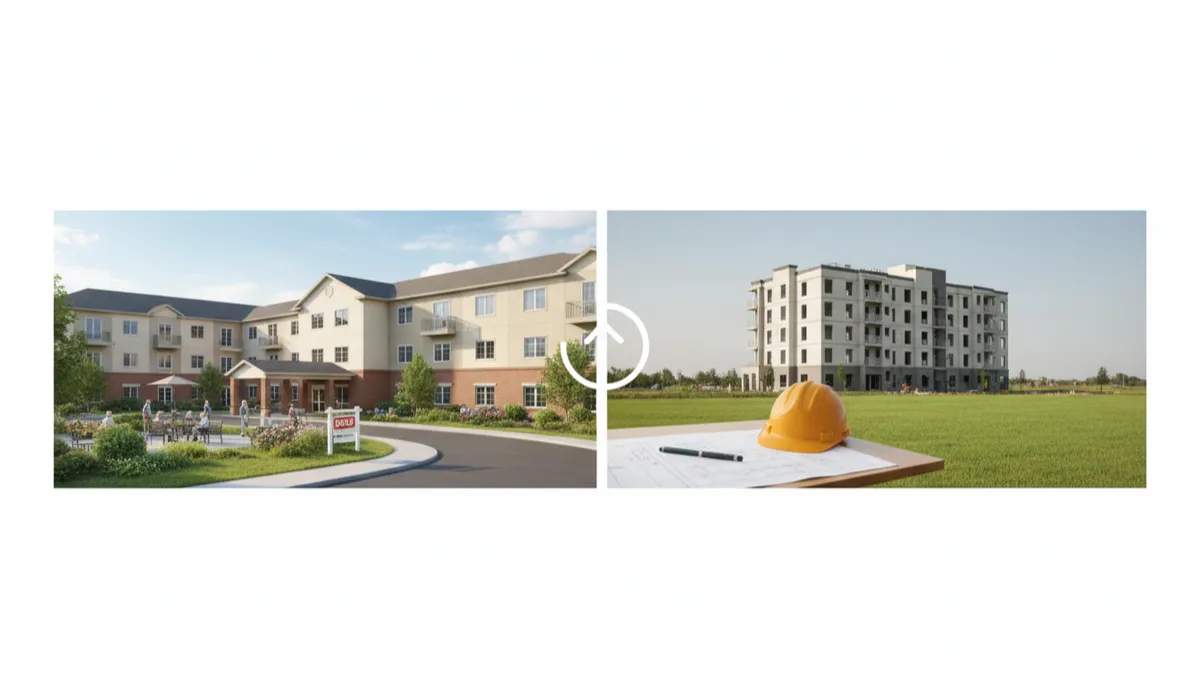
Buying vs. Starting an Assisted Living Facility: Which Is Better?
Assisted Living, Business Ownership, Investment Strategy
Should You Buy an Assisted Living Facility or Start One From Scratch?
Entering the assisted living industry can be both a mission-driven calling and a strategic business move. One of the first decisions every prospective owner must make is whether to buy an assisted living facility that already exists or start an assisted living facility from the ground up. Each path carries very different implications for capital, timelines, risk, staffing, licensing, and long-term growth.
For aspiring owners, healthcare entrepreneurs, investors, and existing healthcare operators, this choice shapes everything from your assisted living facility startup costs to your daily operational responsibilities. In this guide, Assisted Living Network Group (ALNG) walks through the core differences between a facility acquisition and a new startup so you can align your decision with your financial position, market, and long-term business objectives.
1. Understanding the Two Options
What It Means to Purchase an Existing Assisted Living Facility
Buying an assisted living facility usually involves acquiring the real estate, the operating business, or both. Depending on how the deal is structured, you may purchase:
The property and the licensed operating entity (a full assisted living facility acquisition)
The business operations only, with a lease on the building
The property only, intending to bring in a new operator or license
In many transactions you acquire an ongoing operation: residents, staff, vendor contracts, policies, and a reputation in the community. You are essentially stepping into an existing assisted living business ownership role on day one, with all the benefits and challenges that come with it.
What It Means to Start an Assisted Living Facility From Scratch
Starting an assisted living facility from scratch means building a new operation step by step. This typically includes:
Conducting market and feasibility analysis to confirm local demand and competition
Selecting and purchasing or leasing a property that meets state assisted living licensing requirements and zoning rules
Designing, constructing, or renovating the building to meet life-safety and accessibility codes
Developing your assisted living facility business plan, policies, and procedures from the ground up
Applying for state licensure, passing inspections, and hiring an administrator (if required by your state)
Recruiting and training staff, marketing to referral sources, and admitting your first residents
This path generally involves more planning time and upfront facility startup costs, but it offers greater control over your model, culture, and brand.
2. Buying an Existing Assisted Living Facility: Advantages
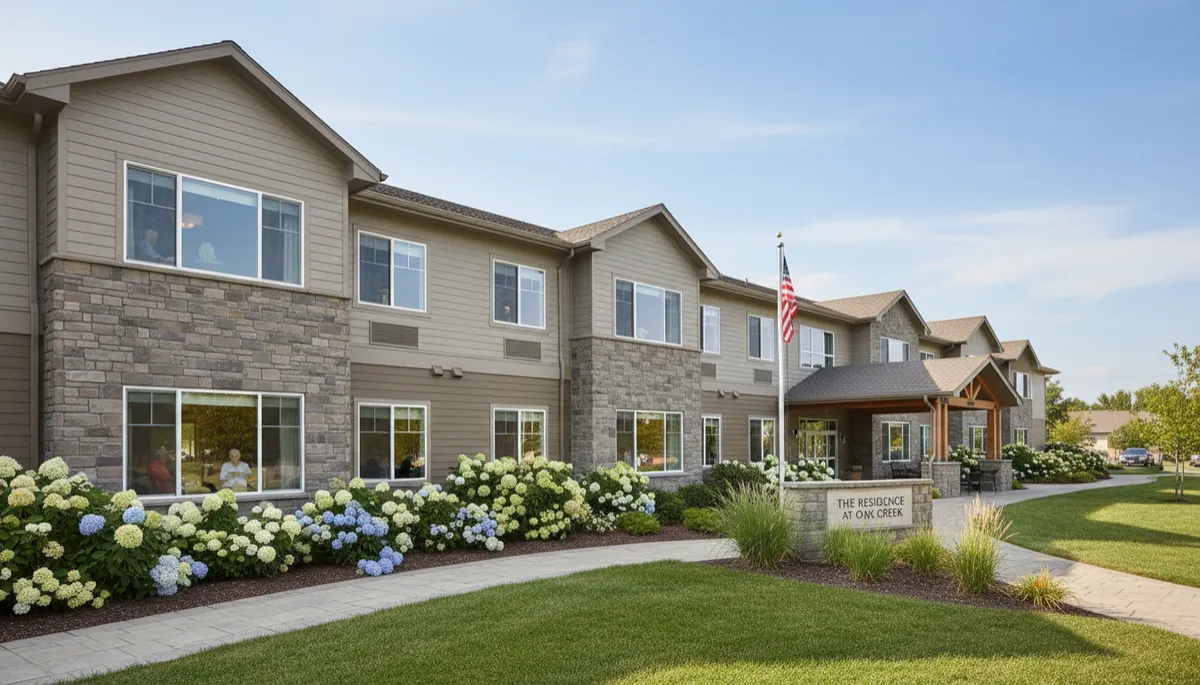
Acquiring an existing facility can offer immediate occupancy, staff, and community visibility.
When evaluating whether to buy or start an assisted living facility, many entrepreneurs are drawn to acquisitions because they appear faster and more predictable. Potential advantages include:
Existing physical facility: The building is already constructed, licensed as an assisted living or similar category, and designed for resident use. This can significantly compress your development timeline compared to new construction or heavy renovation.
Established operations: Policies, procedures, vendor relationships, and clinical protocols are already in place. You are not starting from a blank page, which can reduce early-stage trial and error.
Existing residents and revenue: A performing community may provide immediate cash flow and shorten the time to reach break-even compared with a new build that opens empty. However, you must verify occupancy and payer mix carefully during due diligence.
Workforce in place: Caregivers, med techs, housekeeping, and administrative staff may already be on payroll. Retaining experienced employees can stabilize care quality and resident relationships during the transition, though retention is never guaranteed.
Operational systems and processes: Electronic health records, medication management workflows, and maintenance routines may already be implemented, reducing your initial setup work.
Faster entry into the market: If licensing and change-of-ownership approvals are handled efficiently, you may begin operating under your ownership much sooner than if you were building or converting a property.
These benefits depend heavily on the condition, compliance history, and financial performance of the facility you are acquiring. A strong operation can be a powerful launchpad; a struggling one can absorb capital and attention quickly.
3. Buying an Existing Facility: Disadvantages and Risks
On the other side, purchasing an existing operation carries meaningful risks. A thorough financial, operational, regulatory, and physical review is essential before committing to any assisted living facility purchase.
High acquisition cost: The cost of buying an assisted living facility can be substantial, especially in high-demand markets or for larger communities. Purchase price often reflects not only real estate value but also the business’s earnings history and perceived growth potential. Exact pricing varies widely by location, condition, and performance (assistedlivingfacilities.org).
Hidden financial liabilities: Past-due vendor accounts, unresolved legal claims, payroll issues, or unpaid taxes can surface after closing if not identified in due diligence. Asset-purchase structures can mitigate some risks, but careful legal and accounting review is still critical.
Existing compliance deficiencies: State survey reports may reveal citation patterns, such as medication errors, staffing shortfalls, or life-safety violations. You inherit the responsibility to correct these issues, and regulators may monitor the facility closely under your ownership.
Staffing and retention challenges: Culture problems, burnout, or low wages may have contributed to turnover before you arrive. While a new owner can improve conditions, it often takes time to rebuild trust and stabilize the team—especially in a tight labor market like assisted living is experiencing nationwide (Senior Housing News, 2026).
Poor reputation or dissatisfaction: Online reviews, state complaint records, and word-of-mouth among referral sources may reflect past issues. Rebranding and service improvements can help, but reputation recovery is rarely instant and should be factored into your assisted living business investment timeline.
Building maintenance and renovation expenses: Older properties may need upgrades to meet current codes, improve accessibility, or remain competitive with newer communities. Roofs, HVAC systems, sprinkler coverage, and room configurations can all drive unplanned capital expenditures after closing.
Licensing and change-of-ownership uncertainty: In most states, the operating license does not simply transfer with a sale. Buyers often must submit change-of-ownership applications, background checks, and updated policies. Some states may require a new license entirely. Failing to understand this process can delay your closing or your ability to operate under your own name.
📌 Key Takeaway: An attractive purchase price alone is not enough. Comprehensive due diligence on finances, licensing status, physical plant, and staffing is non-negotiable before you commit to buying an assisted living business.
4. Starting an Assisted Living Facility From Scratch: Advantages
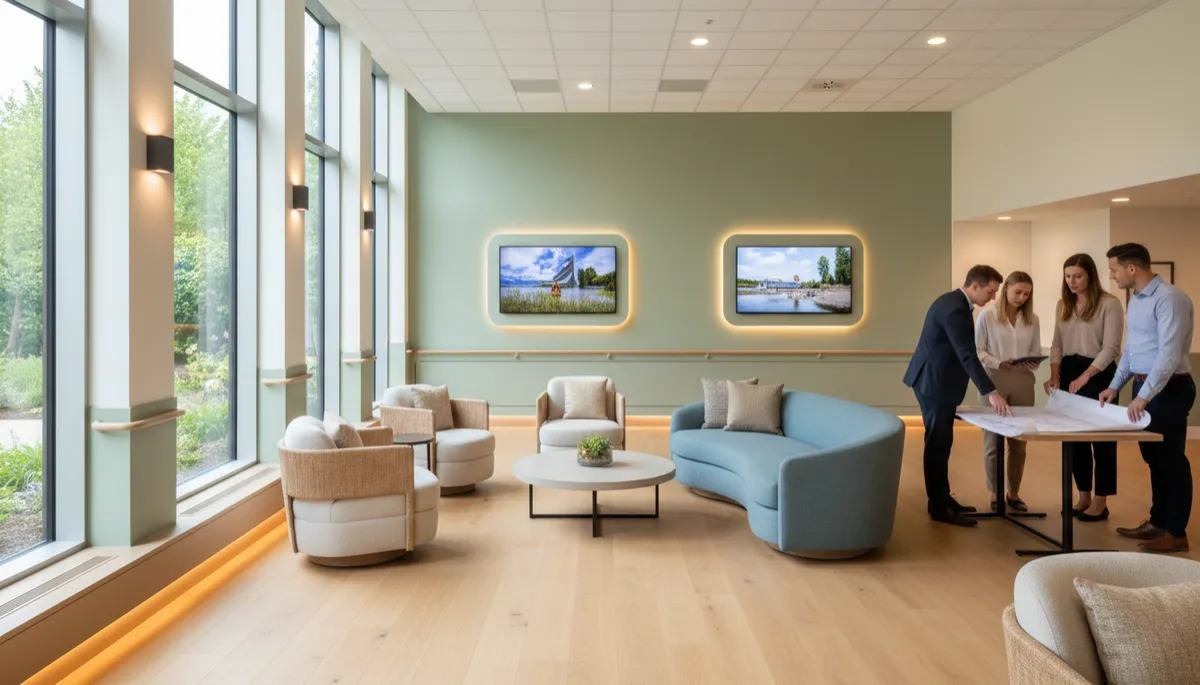
Building from scratch lets you tailor design, services, and culture to your vision.
For many entrepreneurs, the appeal of a ground-up project is the chance to design a community that reflects their vision of quality, hospitality, and care. Key advantages include:
Greater control over the business model: You can decide whether to focus on traditional assisted living, memory care, small residential homes, or a hybrid model, and align services, staffing, and pricing accordingly. This flexibility is important as the U.S. market continues to evolve and specialize.
Choice of property and location: Starting from scratch gives you the flexibility to select a location based on your target residents, local demand, accessibility, and competition. Before committing to a property, conduct a feasibility study to evaluate the area's senior population, existing assisted living facilities, pricing, referral opportunities, and potential demand. A location that looks attractive on paper may not necessarily support a financially sustainable assisted living business.
Purpose-built design: You can incorporate modern safety systems, technology, and amenities from day one—such as wider hallways, accessible bathrooms, AI-based fall-detection systems, and flexible common areas—rather than retrofitting an older building.
Intentional culture and policies: Starting fresh allows you to define your mission, values, staffing practices, and resident experience without inheriting legacy habits. You can build a culture of accountability and hospitality from the beginning, which is vital in a hands-on business like owning an assisted living facility.
Brand and reputation built your way: With effective marketing, referral outreach, and consistent service, you can position your community as a trusted local option without having to overcome someone else’s history.
5. Starting From Scratch: Disadvantages and Challenges
The freedom of a new build comes with meaningful hurdles that must be built into your assisted living startup guide and financial projections:
Property acquisition or leasing expenses: Securing an appropriate site—whether a single-family residential care home or a larger community—requires capital, negotiations, and often competition with other real estate uses. Zoning for assisted living or “residential care” must be confirmed in advance (Group Home Path).
Construction and renovation costs: The cost of opening an assisted living facility can include structural changes, sprinkler systems, fire alarms, accessibility modifications, and interior build-out. These costs are highly variable based on state codes, building size, and property condition, so local contractor estimates are essential rather than relying on generic national averages.
Zoning and land-use considerations: Some municipalities limit where assisted living or “group homes” can operate or impose spacing requirements from existing facilities. Engaging zoning officials early can prevent costly surprises mid-project.
Licensing and regulatory requirements: Each state has its own categories, such as Residential Care Facilities for the Elderly (California), Assisted Living Residences (New York), or personal care homes. Many require plan reviews, life-safety inspections, and administrator qualifications before licensure (License Navigator). These steps add time and complexity to your launch.
Recruiting and training employees: Because you start without an existing workforce, you must recruit caregivers, med techs, dining staff, and leadership while the building is still empty. Training on your policies and state rules is mandatory before opening to residents in most states, which adds pre-revenue costs to your facility startup costs.
Marketing and attracting initial residents: Filling a new community takes time and a structured outreach plan to hospitals, home health agencies, senior centers, and online channels. National data show strong demand and rising occupancy, but your local lease-up speed will depend on competition, pricing, and reputation.
Operating expenses before break-even: Utilities, insurance, payroll, and debt service start before your census is full. Your assisted living facility startup costs should include several months of working capital to cover this ramp-up period.
Longer timeline to opening: Compared to acquiring a stabilized facility, a new build or conversion often requires a significantly longer timeline from concept to first resident. For many owners, this is the single biggest tradeoff between buying and starting fresh.
6. Financial Comparison: Buying vs. Starting
Every project is unique, and there are no universal numbers for assisted living facility startup costs or acquisition prices. Costs vary significantly by state, market, property type, bed count, and condition. Instead of relying on rules of thumb, it is helpful to compare the categories of investment involved in each path.
Buying an Existing Facility | Starting a New Facility |
|---|---|
Purchase price for real estate and business (highly variable by market and performance) | Property purchase or lease costs based on location and size |
Financing terms, lender fees, and potential seller financing structures | Construction or renovation budget, including contingencies for code upgrades |
Closing costs (legal, appraisal, environmental, surveys, transaction fees) | Licensing, plan review, and inspection fees based on state requirements |
Working capital to stabilize operations, address immediate repairs, and implement culture changes | Furnishings, equipment, technology systems, and initial supplies before opening |
Renovations to modernize units, common areas, or life-safety systems after purchase | Pre-opening staffing, training, and marketing to build census from zero |
Assumed liabilities if purchasing the operating entity (subject to deal structure) | Working capital to cover operating losses during the lease-up period |
In both scenarios, you should work with experienced lenders, CPAs, attorneys, and consultants who understand assisted living investments. Evaluate local occupancy trends, operating expenses, staffing costs, pricing, and projected revenue before committing capital. Assisted Living Network Group (ALNG) can help you develop realistic cash flow projections and assess how changes in occupancy or expenses could affect your business.
7. Licensing and Regulatory Considerations

State licensing rules shape timelines, staffing, and capital needs for every project.
Unlike nursing homes, assisted living facilities are not licensed under a single federal program. Each state regulates assisted living (or equivalent categories) through its own agency—often the health department or social services department—and uses its own terminology and standards.
Some key regulatory themes that affect both buying and starting an assisted living facility include:
Administrator licensing: At least 14 states require a licensed administrator or assisted living director (Regulatory Tracker 2026). For example, Minnesota requires extensive training, supervised experience, and exams for assisted living directors (Minnesota Legislative Auditor, 2026). If you are purchasing a facility, you must confirm that your future administrator meets your state’s requirements and that any leadership transition is acceptable to regulators.
Staffing and overnight coverage: Many states require 24/7 staffing, and at least 18 mandate awake overnight staff in certain settings (Regulatory Tracker 2026). These rules directly impact your staffing model, payroll budget, and scheduling systems, whether you acquire an existing team or hire from scratch.
Zoning, building codes, and life safety: Fire codes, sprinkler requirements, accessibility standards, and building classifications must be satisfied before licensure. States like Massachusetts have recently strengthened inspection and safety rules after high-profile incidents, underscoring the importance of up-to-date compliance.
Certificate of Need (CON) in some states: Seven states, including Alabama, Arkansas, Connecticut, Kentucky, Missouri, New Jersey, and New York, require a Certificate of Need for certain assisted living projects, and North Carolina requires CON for some 12-bed homes (License Fees by State, 2026). CON laws can limit new capacity and affect whether starting from scratch is feasible in your chosen market.
Importantly, purchasing an existing facility does not guarantee that its license will transfer to you automatically. Many states require a change-of-ownership application, new background checks, revised policies, and sometimes an entirely new license.
According to the National Center for Assisted Living's 2025
Assisted Living State Regulatory Review, 18 states and the District of Columbia reported regulatory or legislative changes affecting assisted living between January 1 and December 31, 2025. Key areas of change included direct-care staff education and training, administrator and director education, and staff scheduling requirements. This highlights why prospective owners should verify current requirements with their state licensing agency before signing a purchase agreement, lease, or construction contract. (NCAL 2025 Assisted Living State Regulatory Review)
8. Which Option Is Right for You?
When deciding whether to buy or start an assisted living facility, there is no one-size-fits-all answer. The right path depends on your capital, experience, risk tolerance, local market, and long-term goals for assisted living business ownership.
Buying May Be a Better Fit If You:
Have sufficient capital or financing capacity for a potentially large assisted living facility acquisition, including reserves for improvements and transitions.
Prefer to take over an established operation with residents, staff, and revenue in place rather than building everything from zero.
Have the experience—or professional support from groups like Assisted Living Network Group (ALNG)—to evaluate financial statements, survey history, staffing patterns, and local reputation thoroughly before you buy.
Are comfortable managing inherited challenges, such as culture change, systems upgrades, or rebranding efforts.
Starting From Scratch May Be a Better Fit If You:
Want maximum control over your facility’s design, services, and resident profile—from boutique memory care to small residential homes or larger campuses.
Have a clear, differentiated concept and are willing to invest time in planning, licensing, and pre-opening activities before revenue begins.
Possess or can access the capital needed not only for property and build-out, but also for marketing and working capital during lease-up.
Place a high value on building your own brand, culture, and operating systems from day one without legacy constraints.
Neither choice is automatically better. What matters is how well your path matches your financial resources, market conditions, regulatory environment, and capacity to manage a complex, hands-on operation. Assisted living is not a passive investment; success requires active leadership, oversight, and a commitment to resident well-being.
9. Important Questions to Ask Before Making Your Decision
Before committing to either purchasing or building, ask yourself—and your advisory team—the following questions:
What is my available investment capital? How much can I realistically allocate to acquisition or development, including reserves for unexpected costs and working capital?
Which state do I intend to operate in? How do that state’s assisted living licensing requirements, staffing rules, and fees affect my choice to buy or build (License Fees by State, 2026)?
Is there sufficient demand in my preferred location? Have I researched the local senior population, competing assisted living communities, occupancy trends, pricing, and available referral sources? Have I conducted a feasibility study to determine whether the market can support the type and size of facility I intend to operate?
Do I fully understand the licensing process? Have I spoken directly with the state licensing authority or reviewed current regulations and application guides—not just older online summaries?
Can I recruit and retain qualified staff? What is the local labor market like for caregivers, nurses, and administrators? How will I compete on wages, training, and culture in a tight workforce environment?
Do I have an experienced administrator or operational team? If not, what partnerships, management agreements, or consulting relationships (for example, with ALNG) can help fill that gap?
Have I evaluated the financial risks? How sensitive is my assisted living facility business plan to changes in occupancy, wage inflation, or regulatory shifts? Have I modeled conservative, moderate, and optimistic scenarios?
Do I have sufficient working capital? Beyond acquisition or build-out, can I sustain the operation through renovations, culture change, or a multi-year lease-up period if needed?
What professional guidance do I need? Legal, accounting, clinical, and operations experts—along with advisory organizations like Assisted Living Network Group—can help you avoid costly missteps.
Conclusion: Moving Forward With Confidence

The best path—buying or starting—depends on your goals, market, and resources.
Entering the assisted living field is both an opportunity and a responsibility. Whether you choose to acquire an existing community or create a new one, you are stepping into a highly personal service business that affects residents, families, and staff every day.
Buying an existing facility may offer faster cash flow, established operations, and immediate market presence—but it also brings potential hidden liabilities, culture challenges, and regulatory complexity. Starting from scratch offers unmatched control over design, brand, and culture—but requires patience, significant facility startup costs, and a longer path to stabilization.
Neither option guarantees profitability, and neither is passive. Success in assisted living business ownership demands active leadership, strong compliance systems, thoughtful staffing, and a clear understanding of your market. With careful research, a realistic assisted living facility business plan, and the right advisory support, you can choose the path that best aligns with your vision and long-term objectives.
How Assisted Living Network Group Can Help
Assisted Living Network Group exists to support aspiring and current owners at every stage of assisted living business investment—from early exploration through acquisition, development, and ongoing operations. Our team understands the realities of buying an assisted living business and the complexities of launching a new community in today’s regulatory and labor environment.
Through educational resources, strategic consultations, and practical tools, ALNG helps you:
Clarify whether acquisition or ground-up development better fits your goals and capital structure
Understand state-specific assisted living licensing requirements and how they affect your timelines and staffing plans
Evaluate opportunities, including market demand, regulatory risk, and realistic assisted living facility startup costs or acquisition budgets
Strengthen your operational strategy, staffing model, and marketing approach for long-term sustainability
If you are considering whether to buy or start an assisted living facility, now is the time to gather information, ask hard questions, and surround yourself with experienced advisors. Visit the Assisted Living Network Group (ALNG) website to explore our guides, checklists, and educational content, and contact us to discuss how we can support your journey into assisted living ownership and operations.
